
Facial Reconstruction · Webster, Texas
Restoring the face to reveal your confidence.
After skin cancer removal or facial injury, reconstruction is about restoring what has been changed while respecting the natural anatomy of the face. By carefully working within facial contours, skin lines, and tissue movement, Dr. Hu creates repairs designed to heal naturally and preserve your appearance.
About the procedure
Facial form and function.
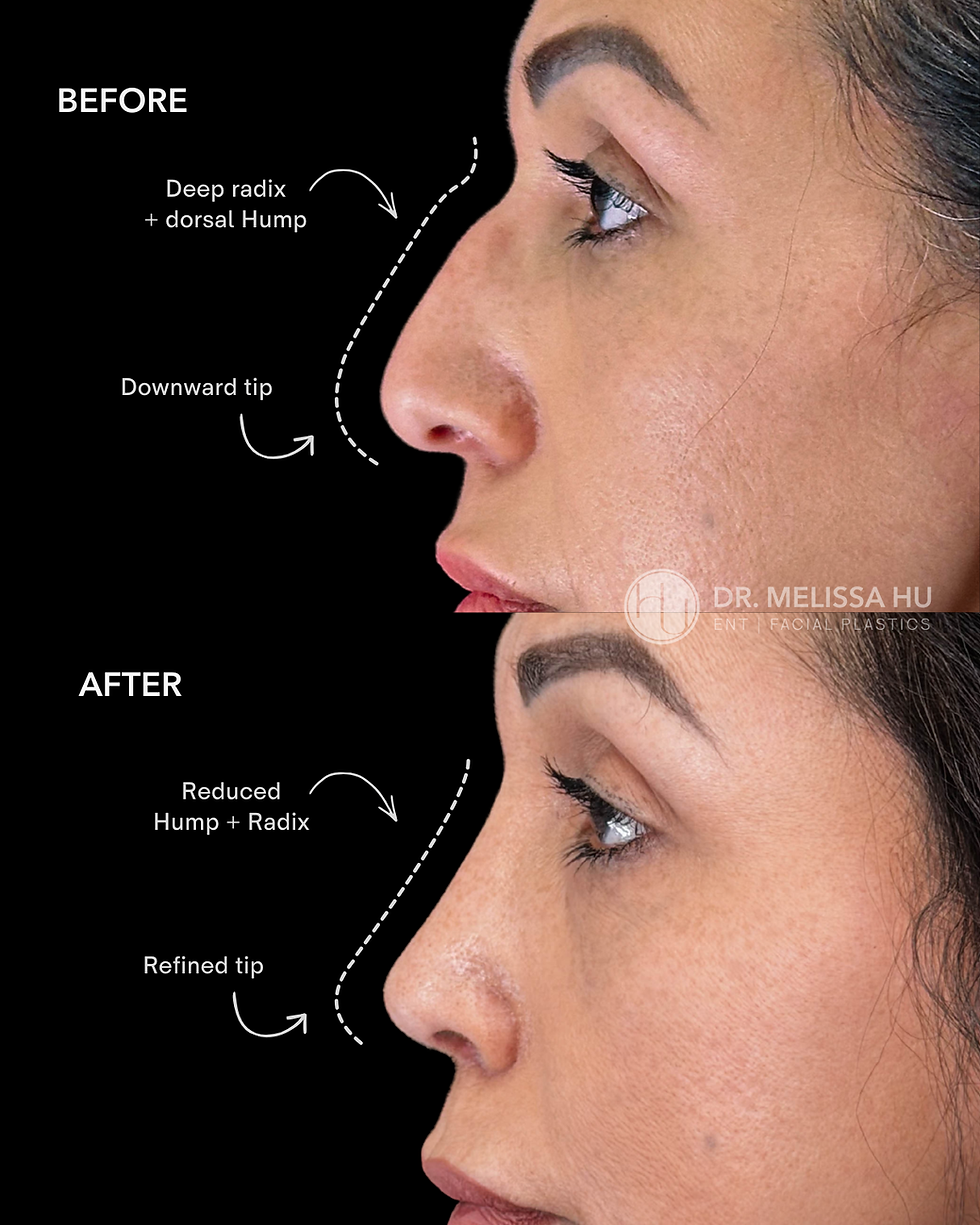
Facial reconstruction is about more than restoring what was lost—it is about rebuilding facial form, function, and harmony. Dr. Hu draws upon the full range of facial plastic surgery techniques, including rhinoplasty, facelift surgery, fat grafting, facial implants, and non-surgical treatments, to create personalized solutions for each patient. Her goal is to restore balance and help patients feel like themselves again.
.png)
What patients come in for
Often it follows skin cancer removal.
Many patients arrive after a skin cancer has been removed, left with an opening on the face that needs careful closing. Others come after an injury. The worry is almost always the same: whether the repair will show.


The approach
Closing along the face's own lines.
This is where Dr. Hu's work began. She designs each repair so the tissue survives and heals within the natural creases and shadows of the face, restoring both how it works and how it looks. Function and appearance are solved together, not one after the other.


The difference
A repair designed to be unnoticed.
Well-done reconstruction is designed to disappear. Dr. Hu works with the natural architecture of the face, restoring tissue along existing contours and facial lines so the repair blends seamlessly into the surrounding features. The goal is not simply repair, but restoration of harmony, function, and confidence.


Candidacy
Who reconstruction is for?
Reconstruction is often the next step after skin cancer removal (Mohs surgery) or after an injury to the face. Most patients are candidates once the affected area is ready for repair. Dr. Hu will assess the specific defect and health considerations at consultation.

Procedure length
Varies by defect
Anesthesia
Local or general
Setting
Outpatient
Initial recovery
1 to 2 weeks
Return to work
Varies by area
Exercise
2 to 4 weeks
Final results
Up to 12 months
Recovery
Wound care is where the result is won.
Keeping the incisions clean and protected is the most important part of healing well here. Dr. Hu will walk you through exactly how to care for the area and what to watch for, and she keeps herself easy to reach while it heals.
Recovery
A gentle, predictable recovery.
The first few days are focused on reducing swelling and supporting healing with icepack. Swelling peaks around day 3 to 5. A small, hidden stitch is removed at your one-week follow-up, and most patients return to their normal routines shortly afterward. As swelling continues to resolve, the eyes gradually appear more rested, open, and refreshed.
.webp)
recovery timeline
Scars fade with time and care.
The inside heals within four to six weeks. The outside takes longer, settling in stages before the final refinement shows.
Week 1
Sutures out
Sutures come out at one week.
Weeks 1 to 2
Diligent wound care
Keeping incisions clean and protected from the sun sets up for optimal healing.
1 to 2 months
Redness & swelling peak
Early redness and firmness peaks during this period of healing.
3 to 6 months
Softening
Swelling and scar contracture slowly relax allowing incisions to flatten and fade into the surrounding skin.
Up to 12 months
Fully matured
The repair reaches its final, settled state.
Frequently asked questions

.png)


.png)