
About the procedure
Repositioning deeper tissues affected by time.
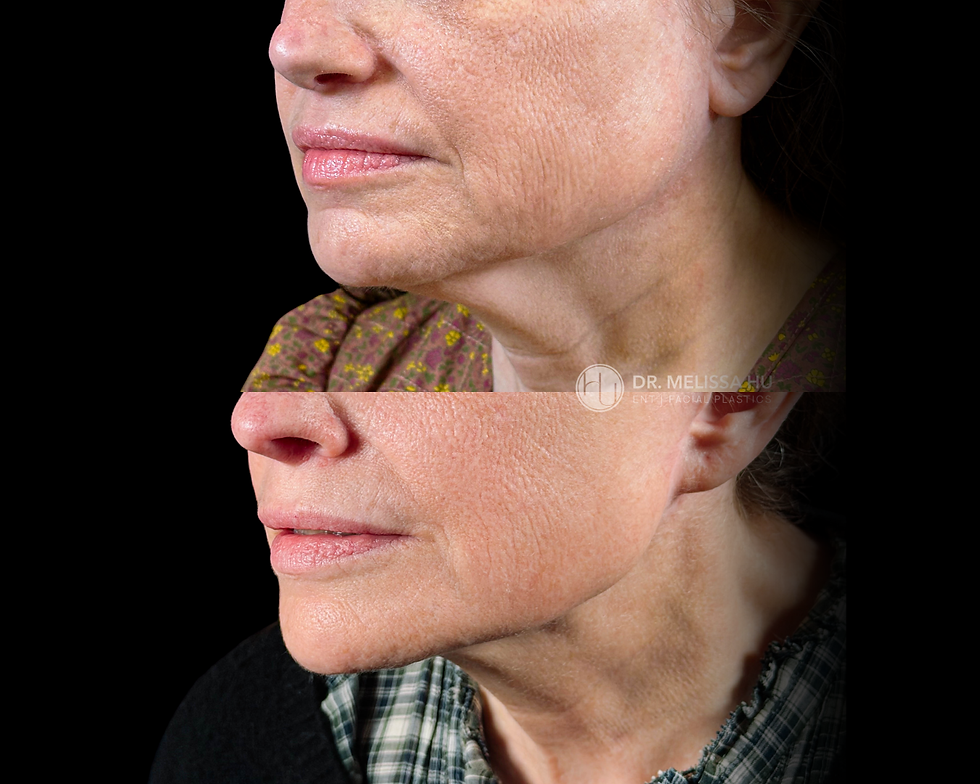
A facelift is designed to restore the underlying architecture of the face by repositioning tissues that have changed with time. The goal is a refined jawline, smoother neck contour, and a natural result that appears rested, not operated on.
What patients notice
Many notice looking tired before looking older.
Patients often notice changes in the lower face first, a heavier jawline, fullness beneath the chin, or a loss of definition. These concerns are often caused by changes in the deeper facial tissues rather than loose skin alone. During consultation, Dr. Hu carefully evaluates your anatomy to understand what has changed and creates a personalized plan to restore natural balance and contour.


The approach
Lifting tissue, not pulling skin.
Dr. Hu focuses on restoring the deeper facial structures that provide support, gently repositioning the underlying tissues before addressing any true excess skin. By treating the foundation rather than simply tightening the surface, results remain soft, natural, and expressive. Depending on your anatomy, procedure goals, and comfort level, facelift surgery may be performed with sedation or under general anesthesia.


The difference
Never overdone. Simply refreshed.
The signs of an overdone facelift are easy to recognize, a stretched appearance, unnatural tension, or a face that looks changed rather than refreshed. Dr. Hu’s approach focuses on restoring the deeper structures of the face while respecting your natural anatomy and expression. The goal is not to create a different person, but to reveal a more rested, balanced version of yourself.


Candidacy
Is a facelift right for you?
The best facelift candidates are generally healthy, have realistic expectations, and are seeking improvement for themselves, not to look like someone else. Age is only one factor; candidacy depends more on the specific changes occurring in your face, including tissue descent, skin laxity, and loss of definition. For patients who smoke, stopping before surgery is an important part of preparing for a safe recovery and optimal healing.

Initial recovery
1 to 2 weeks
Return to work
2 to 3 weeks
Exercise
4 to 6 weeks
Final results
2 to 3 months
Recovery
More manageable than expected.
Facelift recovery is often more manageable than patients expect. Because the procedure focuses on repositioning and restoring soft tissues rather than altering bone, discomfort is typically well controlled. A compression dressing is worn consistently during the first week and often at night during the following week to support healing. Most patients feel socially comfortable around two weeks and gradually return to their normal routines as swelling continues to improve.
Recovery
A gentle, predictable recovery.
The first few days are focused on reducing swelling and supporting healing with icepack. Swelling peaks around day 3 to 5. A small, hidden stitch is removed at your one-week follow-up, and most patients return to their normal routines shortly afterward. As swelling continues to resolve, the eyes gradually appear more rested, open, and refreshed.

recovery timeline
Different approaches, one shared goal.
The inside heals within four to six weeks. The outside takes longer, settling in stages before the final refinement shows.
Mini
Lower face and jawline
Best for early aging changes. Smaller incisions with less skin removal.
Full
Face and neck, more advanced laxity
For moderate to advanced laxity. More comprehensive correction under general anesthesia.
Midface
Cheeks and nasolabial folds
Lifts the cheeks and softens smile lines. Hidden temple incision, often combined with a facelift.
Neck
Under the chin and jawline
Removes fullness beneath the chin and tightens neck muscles for a sharper jawline.
Frequently asked questions

.png)


.png)